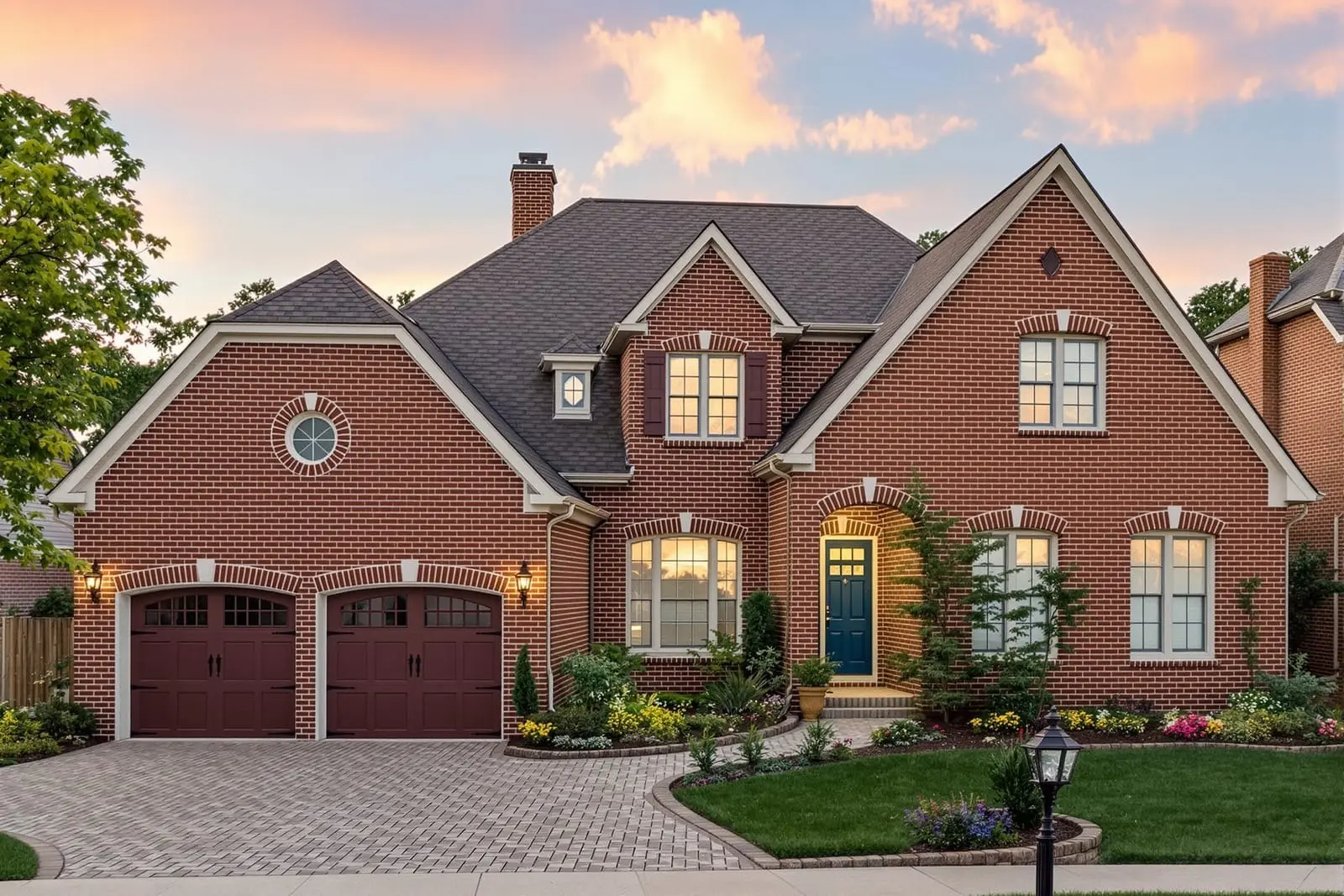
Our brick masonry services in Kansas City, MO keep your home strong, weather resistant, and beautiful. From new brick walls and facades to detailed repairs, our skilled brick masons deliver clean lines and long lasting workmanship. We use quality materials and proven methods so your brickwork stands up to local weather for years.
Vanguard Masonry Kansas City provides professional brick masonry throughout Kansas City, MO and the surrounding area. Our licensed, insured crew delivers safe, clean, on-time work with a free estimate before anything begins. Call (816) 608-6824 or request your free quote.
Brick Masonry Services in Kansas City, MO
Brick work in Kansas City is not one-size-fits-all. We have 100-year-old brick foursquares in Midtown, 1950s ranches in Waldo, and newer builds in the Northland, all built with different bricks and mortar mixes. At Vanguard Masonry Kansas City, we treat brick masonry as a craft that has to fit the age of the home, the soil conditions, and our freeze-thaw winters.
When we look at a project, we start with a detailed inspection instead of guessing. For older homes in areas like Hyde Park or Westside, we check whether the existing brick is soft, hand-pressed, or harder, machine-made brick. That matters, because pairing soft brick with a modern, too-hard mortar can trap moisture and cause spalling. On newer homes in places like Lee’s Summit or Liberty, we often see modular brick and stronger block foundations, so the approach is different.
We handle everything from brick walls and porch columns to steps, mailboxes, chimneys, window sills, and brick veneers. Whether we are repairing damage or building new, our goal is a finished job that looks right for your house and holds up in Kansas City weather without constant patching. Vanguard Masonry Kansas City does not just match color, we match bond patterns, joint style, and brick size so the repair does not jump out from the street.
How Professional Brick Masonry Is Actually Done
A typical brick masonry job starts with demolition or surface prep. For repairs, we carefully remove loose or damaged bricks and failing mortar using hand tools or small grinders to avoid cracking the surrounding brick. For new builds, we set string lines and layout marks so walls run straight and level relative to existing siding, windows, and sidewalks.
Next, we choose materials. We match brick size (modular, queen, engineer), texture (smooth, wire cut, sanded), and color range to the surrounding wall. On older Kansas City homes with discontinued brick, we sometimes blend two or three modern bricks and stain selectively to mimic the original. For mortar, we adjust the mix ratio and type (for example, Type N vs Type S) based on the age of the structure and if it is above or below grade. Softer historic brick usually gets a more flexible mortar so it can breathe and move without cracking.
During layup, we spread mortar beds at a consistent thickness, usually around 3/8 inch, and butter each brick end. Bricks are pressed into place and tapped to line up with the string. We constantly check with levels and plumb lines so corners do not creep out of square. In Kansas City, we allow for expansion joints where needed, especially on long garage walls or fences, so the wall can move slightly with temperature swings instead of cracking.
Once a section is set up slightly, we tool the joints. Joint style is a major part of the look: concave joints shed water well and are common in our area, while raked or flush joints show more of the brick face. We match the existing joint style so patchwork is not obvious. Excess mortar is brushed off so it does not stain the brick, and we keep an eye on weather. If the forecast calls for a quick freeze or heavy rain, we tent and cover the work so the mortar cures slowly and evenly.
At the end, we clean down the brick by hand, not with harsh acid right away. On lighter brick especially, a too-strong cleaning solution can burn the surface and permanently change the color. We usually start with water, brushes, and mild cleaners, then step up only as needed.
Common Brick Problems in Kansas City and How We Fix Them
Kansas City’s wet springs, humid summers, and freeze-thaw cycles in winter are rough on masonry. At Vanguard Masonry Kansas City, the same issues show up again and again: spalling faces on brick, stair-step cracks around windows, loose porch steps, and crumbling mortar joints.
Spalling brick, where the surface flakes or pops off, usually comes from trapped moisture that freezes in the outer shell of the brick. We often see this on chimneys and porch walls without proper caps or flashing. Our repair usually involves removing the worst damaged bricks, installing new brick with a compatible mortar, and improving how water is shed. That can mean adding a proper concrete or stone cap, recutting and sealing chimney crowns, or reworking flashing where brick meets roofing or siding.
Cracks are another frequent call. Vertical or hairline cracks above window and door openings can be a simple mortar issue, but stair-step cracks along mortar joints often mean some movement in the foundation or footing. In many Kansas City neighborhoods with clay soils, minor settling is normal. We evaluate whether the crack is cosmetic or structural, then decide on tuckpointing only, tuckpointing with stitching (using concealed helical bars or brick ties), or, when needed, partnering with a foundation contractor.
Porch and step failures are especially common on older homes with brick or brick-over-concrete steps. Water gets into tiny gaps, freezes, and slowly pushes bricks out. We often rebuild these from the footing up instead of just gluing on new brick. That might mean pouring a new reinforced concrete base, adding proper drip edges, and shifting from standard brick to a harder paver brick on treads where foot traffic and salt are highest.
Mortar erosion is usually the result of age and years of driving rain on one side of a house. On south and west exposures in Kansas City, we see joints worn back as much as half an inch. For that, we perform repointing (also called tuckpointing): we cut or grind out the deteriorated mortar to a proper depth, clean the joints, and pack in new mortar that matches in strength, color, and texture. Done right, this stabilizes the wall and keeps water from working its way inside.
What Drives Brick Masonry Cost in Kansas City
Vanguard Masonry Kansas City prices brick masonry on real conditions, not just square footage. There are several main factors that influence cost.
Access and height: Ground-level brick work on a ranch home is faster than chimney repair three stories up in Midtown. Chimney and high wall work usually needs scaffolding, roof harnesses, and extra labor, which all affect price. Tight side yards or steep driveways can also influence setup time.
Brick and mortar matching: Simple new construction with readily available brick is more straightforward. Matching old or discontinued brick on a 1920s Brookside house can mean extra time sourcing blends, custom staining, or ordering from out of state. Getting the color and texture right might add to the material cost but makes a big difference in curb appeal and resale value.
Extent of demolition and prep: If the underlying block or footing is sound, we can often just replace the outer brick. If freeze-thaw cycles or poor drainage have damaged the base, we may recommend excavating, pouring a new footing, or adding drainage. That kind of foundation work increases cost but keeps you from paying twice for the same area later.
Job size and setup: Larger projects like full-wall repointing or new brick veneer on an addition tend to be more efficient per square foot because the setup cost is spread out. Small but technical jobs, like repairing a few bricks directly over a glass block window or in a decorative arch, can take surprising time even though the material quantity is small.
Finishes and extras: Special joint profiles, decorative patterns (like herringbone or basketweave on patios and steps), stone accents, and custom caps or sills all affect labor. We always spell these options out clearly in the estimate so you know what is driving the number and can adjust based on your budget.
What Kansas City Homeowners Should Ask Before Hiring a Brick Mason
Before you hire anyone to work on your brick, a few direct questions can save you a lot of trouble.
Ask how they handle mortar matching, especially on homes built before the 1950s. A one-mix-fits-all approach is a red flag. Vanguard Masonry Kansas City always looks at existing mortar color, texture, and hardness, and we do test mixes on-site when needed. Hard mortar on soft brick can look neat at first but can lead to cracking and face loss over time.
Ask about weather planning. In our climate, brick work done right before a freeze without protection is likely to fail. A reputable mason will mention tenting, insulated blankets, or rescheduling if needed. We plan our schedule around real forecasts and protect fresh work from both heavy rain and overnight freezes.
Ask to see examples of similar jobs in your part of town. Brick in the River Market behaves differently than brick in a newer subdivision in Blue Springs because of age, previous repairs, and exposure. We keep photo sets by neighborhood and project type so you can see how our repairs blend in with existing walls and porches.
You should also know who will actually be on your property. We do not sub out complex brick masonry to the lowest bidder. Our own crews handle layout, demolition, installation, and finishing. The person who walks your job and writes the estimate is involved in planning the work, not just a salesperson disappearing after you sign.
Finally, get clarity on cleanup and protection. Brick dust and mortar can harm landscaping and stain concrete if they are not managed. We protect adjacent surfaces, collect debris daily, and leave the site swept and safe. When the work is done, your first impression should be the quality of the brick, not a yard full of scraps and dust.
“
Professional brick masonry, done right the first time, quality materials, honest pricing, and results that last.