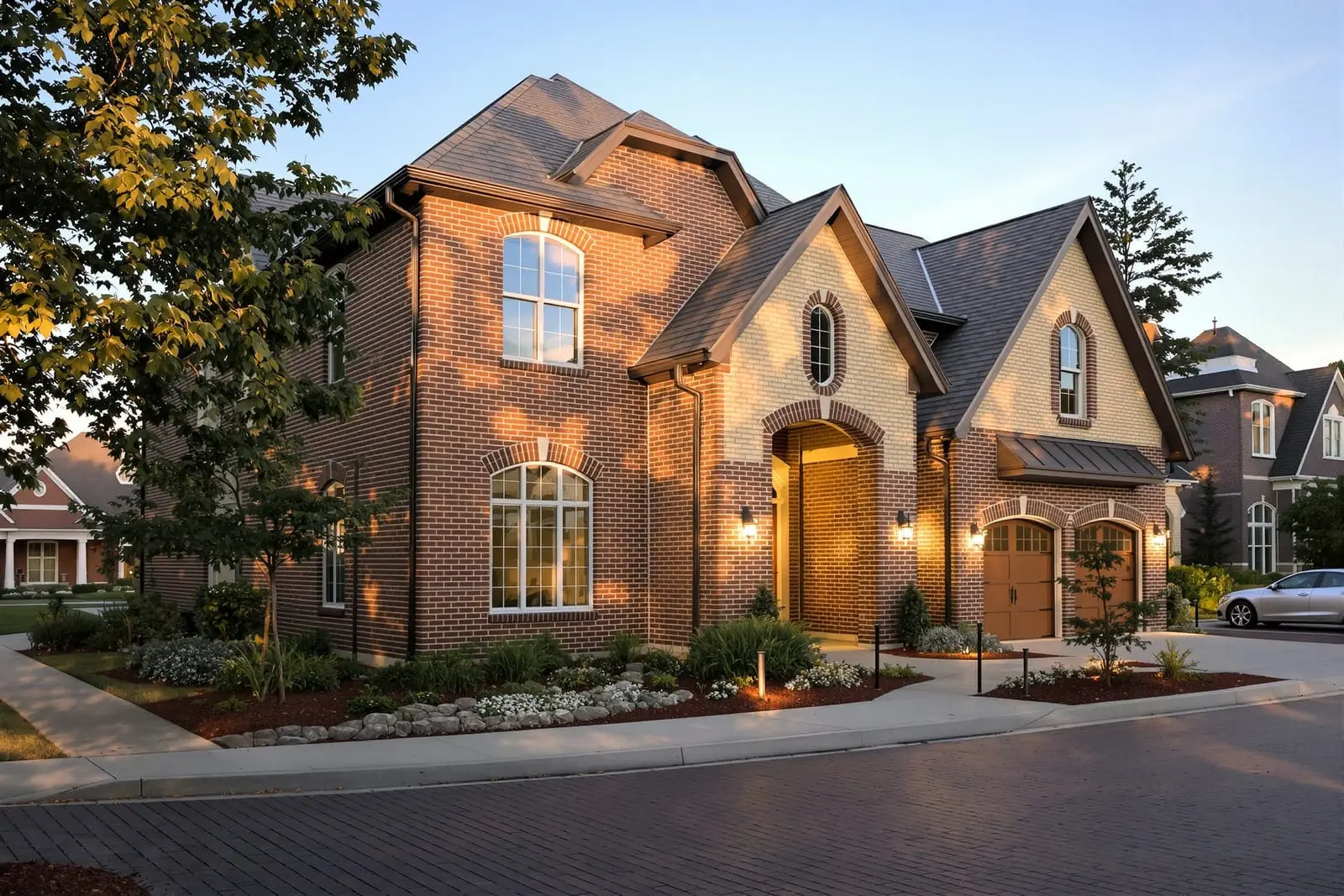
We install commercial brick veneer systems in Kansas City, MO that meet modern performance and aesthetic demands. Our team works with architects and GCs to attach brick facing over backup walls, integrating air barriers, ties, and flashings correctly. The result is a durable commercial brick veneer that resists moisture and looks sharp for decades.
Vanguard Masonry Kansas City provides professional commercial brick veneer throughout Kansas City, MO and the surrounding area. Our licensed, insured crew delivers safe, clean, on-time work with a free estimate before anything begins. Call (816) 608-6824 or request your free quote.
Commercial Brick Veneer Systems for Kansas City Properties
Vanguard Masonry Kansas City designs and installs commercial brick veneer systems that perform in our specific Kansas City climate and soil conditions. We focus on creating cladding assemblies that handle freeze-thaw cycles, wind loads on taller buildings, and long-term moisture control so your exterior holds up for decades.
Commercial brick veneer is not a structural brick wall. It is a carefully engineered exterior skin that is tied back to a structural frame, typically steel, concrete, or CMU. The quality of the veneer system is determined by how well the anchoring, drainage, insulation, and brick coursing all work together. Our team evaluates your building type, occupancy, and façade exposure to design a veneer package that meets code and your aesthetic goals.
Whether you are planning a new retail center, medical office, school addition, municipal building, or industrial facade upgrade, we handle commercial brick veneer as a complete system, not a cosmetic afterthought. That means early coordination with architects and GCs, clear submittals, and predictable schedules that keep your project on track.
How a Commercial Brick Veneer System Is Built
A durable commercial brick veneer starts with a sound backup wall. In Kansas City this is often steel studs with exterior sheathing, concrete block, or cast-in-place concrete. Vanguard Masonry Kansas City reviews the shop drawings and field conditions to confirm that the substrate is plumb, properly braced, and ready to accept anchors before we lay the first brick.
Once the backup is verified, we install through-wall flashings, weep systems, and air and moisture barriers in coordination with other trades. This step is critical. Flashings at shelf angles, sills, and base-of-wall locations collect water that gets behind the veneer and direct it out through weeps. We use stainless or high quality flexible membranes compatible with the specified air barrier, then test drainage paths before brick installation.
Brick anchors or veneer ties are then laid out based on engineering requirements and local code. We space and pattern anchors to handle wind loads typical for midwestern storms and to accommodate anticipated building movement. After anchorage is in, our masons begin laying brick courses, tooling joints, and integrating expansion joints so the veneer can move slightly without cracking.
Throughout the work we check coursing heights against window heads, parapets, and control joints so everything lines up cleanly. At the end, we clean the masonry with products that will not damage the brick face or mortar, then inspect flashings, joints, and weeps before turning the wall over to the GC.
Material Options and Design Choices for Brick Veneer
Commercial brick veneer offers a wide design range without complicating the structure. Vanguard Masonry Kansas City helps you evaluate face brick types, bond patterns, and accent treatments that fit your brand and budget.
Common choices for local commercial projects include standard modular brick for cost efficiency, utility brick for faster coverage on large warehouse or institutional walls, and thin brick panels in select locations where weight or wall thickness is a constraint. We also guide you on color blends that will not show efflorescence or de-icing salt staining as easily, which is important for Kansas City sidewalks and parking lots that see winter treatments.
Design options include soldier courses at window heads, projecting brick bands to break up tall walls, recessed panels for signage zones, and contrasting mortar colors for visual depth. For multi-tenant retail or mixed-use buildings, we often use two or three brick colors with defined transition joints so future tenants can rebrand without touching the masonry.
We also review finish compatibility. If your design includes metal panels, stone, or EIFS along with commercial brick veneer, we detail intersections so that sealants, flashings, and thermal breaks are handled correctly and maintenance responsibilities are clear.
Cost Drivers for Commercial Brick Veneer in Kansas City
Owners and GCs usually want to understand why one commercial brick veneer line item costs more than another. The main drivers are access, height, detailing complexity, and substrate condition. Vanguard Masonry Kansas City explains these factors up front so you can budget accurately.
Access and staging often control labor. A simple one-story retail shell with easy lift access is more economical than a tight urban infill site that requires intricate scaffolding and off-hours deliveries. Taller buildings need more robust scaffolding, hoisting plans, and safety measures, which all add to cost but are necessary for a safe installation.
Details such as multiple brick colors, curved walls, heavy accent bands, special shapes, or extensive soldier and rowlock courses increase layout and cutting time. Complex flashing transitions at canopies, sunshades, and sign supports also add to labor and materials. We identify these cost contributors during preconstruction and can suggest detail adjustments that preserve the design intent while reducing field time.
Existing substrate issues are another driver on retrofit projects. If the sheathing is out of plane, corroded, or wet, or if the existing CMU is poorly aligned, we may need to shim, patch, or fur out the wall to achieve a flat veneer. Addressing these conditions correctly at the start protects the entire cladding investment.
Moisture, Movement, and Common Brick Veneer Problems
In our climate, the two main threats to commercial brick veneer are uncontrolled moisture and building movement. Vanguard Masonry Kansas City designs and installs systems that anticipate both so you spend less on repairs down the road.
Moisture problems usually show up as efflorescence, spalling brick faces, or interior staining behind the veneer. The root cause is almost always inadequate flashing, missing end dams, clogged weeps, or a discontinuous air and moisture barrier. Our crews carefully lap and seal flashings, provide end dams at terminations, and keep weep holes clear with proper spacing and compatible vents.
Movement issues appear as step cracking near corners, window heads, or long expanses of wall without joints. We follow engineering and Brick Industry Association guidance for expansion joint spacing, particularly on long retail strips and warehouse elevations common around Kansas City industrial parks. We coordinate joint locations with the architect so they line up with panel breaks and storefront mullions whenever possible.
For existing buildings that already show problems, we offer investigative services. This can include limited brick removal to inspect flashings, borescope review of cavity conditions, and anchor testing. Based on what we find, we may propose targeted repairs, such as cutting in new flashings at critical points, repointing failed mortar, or inserting additional anchors to stabilize bulging veneer.
Scheduling Commercial Brick Veneer Projects in Kansas City
Commercial masonry is heavily influenced by weather, and Kansas City is no exception. Vanguard Masonry Kansas City plans commercial brick veneer schedules around realistic seasonal conditions so quality does not suffer in the rush to close in a building.
Spring and fall are typically the best windows. Temperatures are more stable for mortar curing and it is easier to protect work from sudden cold snaps or heavy summer storms. During winter projects, we use cold weather masonry procedures, which may include tenting, heating work areas, and using warm water and controlled mortar mixes. These steps protect bond strength but also add to schedule and cost, so we typically recommend planning primary veneer work away from the coldest weeks when possible.
Summer work requires attention to rapid drying from heat and wind. We control mixing water carefully, keep materials shaded when feasible, and adjust work sequencing so long sun-exposed elevations are not left partially grouted in extreme heat. For occupied sites like schools and medical centers, we also coordinate around peak activity periods and delivery restrictions.
For new construction, the best outcomes come when we are involved before the structural frame is complete. Early coordination allows us to confirm shelf angle placements, relief locations, and tie backup preparation with the steel or concrete schedule, which avoids redesigns in the field.
What Kansas City Owners Should Ask Before Hiring a Masonry Contractor
Selecting the right contractor for a commercial brick veneer system is a long-term decision. Vanguard Masonry Kansas City encourages owners, facility managers, and GCs to ask detailed questions, not just compare lump sum prices.
Ask how the contractor will handle air and moisture barrier coordination. Do they understand which trade owns what scope, how penetrations are sealed, and how testing will be performed if required by the specifications or the local authority? Clarifying this early prevents gaps between trades that can lead to water problems.
Request specific examples of similar commercial brick veneer projects in the Kansas City area, and ask about height, use, and façade complexity. A contractor experienced only in small residential work may struggle with multi-story scaffolding, staging, and safety requirements on a commercial build.
It is also important to understand their plan for quality control. We provide sample panels when required, submit detailed shop drawings and product data, and hold internal checks for anchor spacing, flashing installation, and joint tooling standards. We welcome third-party inspections and walk the project with the GC or owner to resolve issues before they become punch list items.
Finally, discuss long-term maintenance. A well-built commercial brick veneer needs periodic inspection of sealant joints, control joints, and weeps. We can map out a simple inspection schedule tailored to your type of building so small issues are corrected early and the façade continues to perform and present well for decades.
“
Professional commercial brick veneer systems, done right the first time, quality materials, honest pricing, and results that last.
Vanguard Masonry Kansas City
Commercial Brick Veneer Systems Across Our Service Area